Bringing a new puppy into your life is exciting, but it also means taking important steps to keep your furry friend healthy. One of the most crucial things you need to know is your puppy’s vaccination schedule during their first year.
Vaccines protect your puppy from dangerous diseases and set the foundation for a long, happy life together. If you want to make sure your puppy stays safe and grows strong, understanding when and which shots they need is key. In this guide, you’ll discover the exact vaccination timeline, what each vaccine does, and tips to keep your puppy protected as they explore the world.
Keep reading to learn how to give your puppy the best start possible!
Core Puppy Vaccines
Core puppy vaccines protect your puppy from serious diseases. These vaccines build strong immunity early in life. Puppies need a series of shots during their first year. Each vaccine targets a specific illness that can be dangerous. Vaccinating on time keeps your puppy healthy and safe.
Distemper And Parvovirus
Distemper and parvovirus are highly contagious and deadly diseases. The distemper virus affects the respiratory and nervous systems. Parvovirus attacks the intestines and can cause severe dehydration. Puppies receive a combined vaccine to prevent both diseases. Early vaccination helps puppies fight these infections effectively.
Adenovirus And Parainfluenza
Adenovirus causes hepatitis, which harms the liver. Parainfluenza leads to respiratory infections, causing coughing and breathing problems. These viruses spread quickly among dogs in close contact. Vaccines protect puppies from severe illness and complications. They are often given together with distemper and parvovirus shots.
Rabies
Rabies is a fatal virus that affects the brain. It spreads through bites from infected animals. Rabies vaccination is required by law in many areas. The vaccine protects your puppy and your family from this deadly disease. Puppies usually get their first rabies shot at three months old.

Credit: pawscanada.ca
Non-core Vaccines
Non-core vaccines protect puppies from diseases based on their lifestyle and risk factors. These vaccines are optional but important for certain regions or activities. Discuss with your vet which non-core vaccines suit your puppy’s needs. Understanding these vaccines helps keep your puppy safe beyond the basics.
Leptospirosis
Leptospirosis is a bacterial infection spread by wild animals and standing water. It can cause serious kidney and liver problems in dogs. This vaccine is recommended if your puppy spends time outdoors or in wet areas. It helps prevent this dangerous disease and protects your family too.
Bordetella
Bordetella causes kennel cough, a highly contagious respiratory illness. Your puppy may catch it in places like dog parks, grooming salons, or boarding facilities. This vaccine is useful if your puppy will be around other dogs frequently. It reduces coughing and helps your puppy stay healthy in social settings.
Lyme Disease
Lyme disease spreads through ticks and can cause joint pain and fever in dogs. This vaccine is important if you live in or visit tick-prone areas. Regular tick prevention combined with vaccination gives the best protection. Keep your puppy safe from ticks by using this vaccine when recommended.
Vaccination Timeline
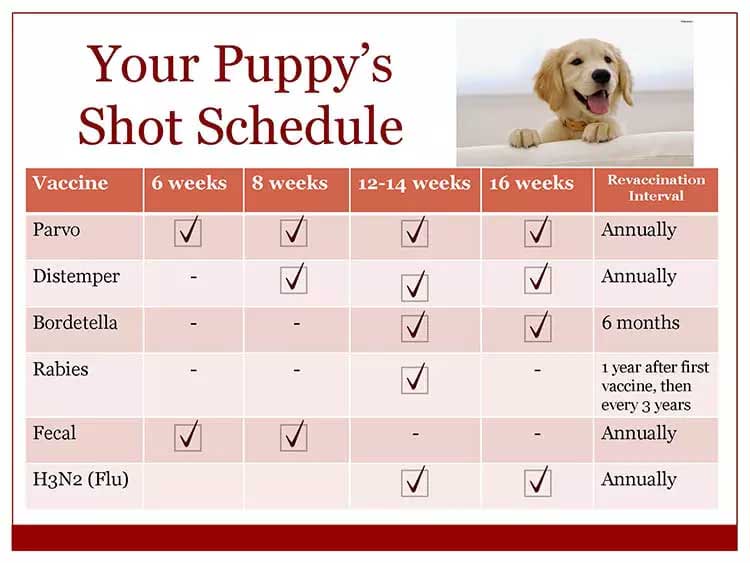
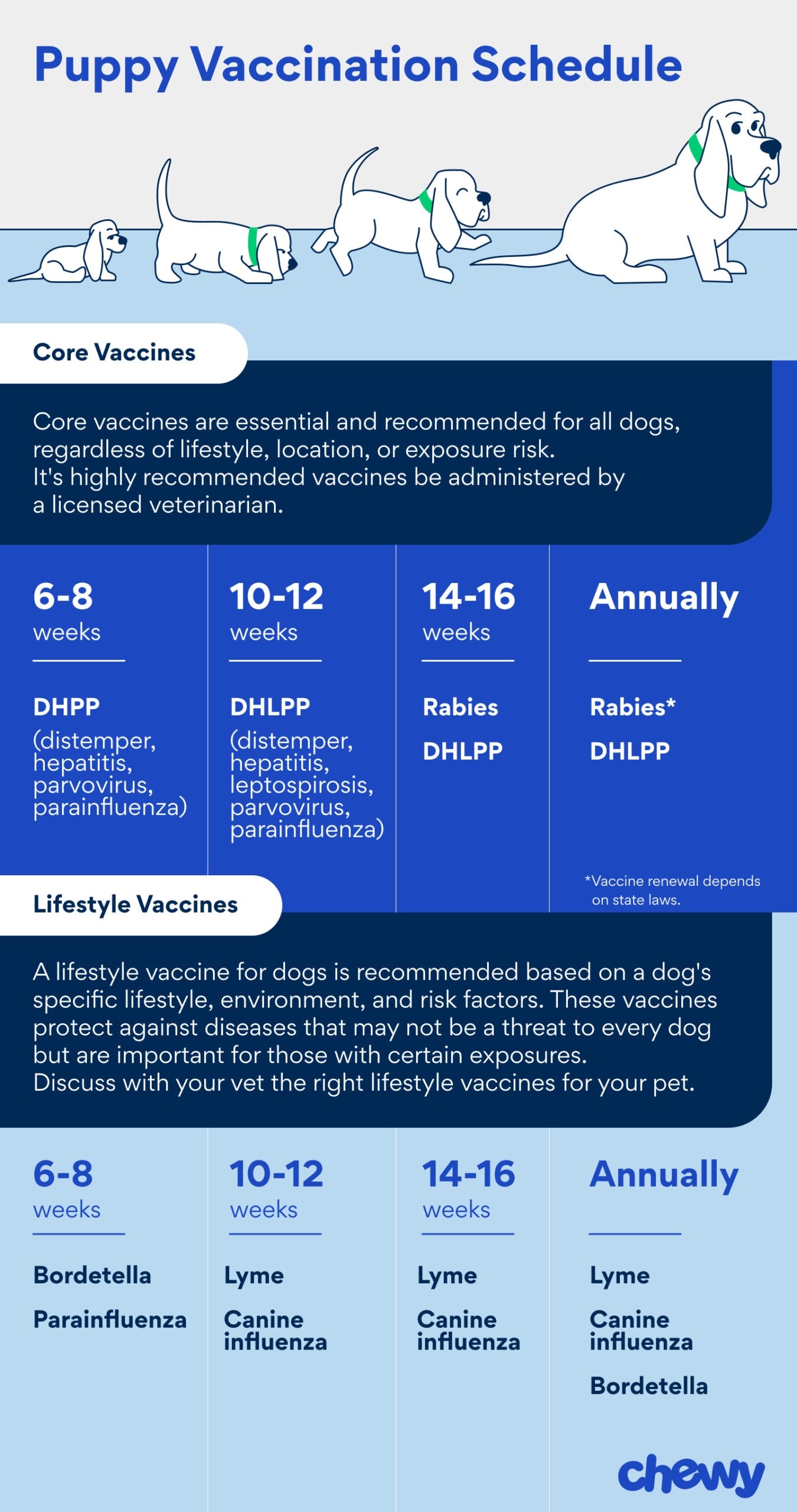
Following a clear vaccination timeline is key for your puppy’s health in the first year. Vaccines protect against serious diseases and help build a strong immune system. The schedule includes several visits to the vet at important growth stages. Each visit targets different illnesses to keep your puppy safe as they grow. Understanding this timeline helps you stay prepared and ensures your puppy gets the right shots at the right time.
6 To 8 Weeks
The first vaccination usually happens between 6 and 8 weeks of age. This shot often includes protection against distemper, parvovirus, and adenovirus. It is the first step in building your puppy’s defense against common diseases. Your vet may also check your puppy’s general health at this visit.
10 To 12 Weeks
The second round of vaccinations comes at 10 to 12 weeks. This dose boosts the protection started in the first vaccination. It often includes the DHPP vaccine, which covers distemper, hepatitis, parainfluenza, and parvovirus. Your puppy’s immune system begins to strengthen with this shot.
14 To 16 Weeks
Between 14 and 16 weeks, your puppy receives the final core vaccines. This visit usually includes the rabies vaccine, required by law in many places. The DHPP vaccine is also given again to ensure full immunity. This stage helps protect your puppy as they explore more of the world.
12 To 16 Months
At 12 to 16 months, your puppy needs booster shots. These vaccines keep the immune system strong over time. The rabies shot is often repeated during this visit. Boosters for distemper, parvovirus, and other diseases help maintain long-term protection. Regular boosters ensure your dog stays healthy through adulthood.
Post-vaccination Care
Post-vaccination care is crucial for your puppy’s health and well-being. After each shot, your puppy needs gentle care to help build strong immunity. Careful attention during this time supports recovery and protects against illness. This period requires special precautions and monitoring.
Waiting Period Precautions
Keep your puppy calm and avoid too much activity for a few days. Do not take your puppy to places with many dogs or unknown animals. This reduces the risk of catching infections before vaccines work fully. Provide a quiet, comfortable spot for rest. Always follow the vet’s advice on activity limits.
Safe Socialization Tips
Socializing helps your puppy learn good behavior and reduce fear. Use safe methods like inviting healthy, vaccinated dogs to your home. Keep outdoor visits short and avoid crowded places. Handle your puppy gently and introduce new people slowly. This builds confidence without risking illness.
Monitoring For Reactions
Watch your puppy closely after each vaccination. Mild reactions like soreness, tiredness, or slight fever may happen. Serious reactions include swelling, difficulty breathing, or vomiting. Contact your vet immediately if these occur. Early action keeps your puppy safe and healthy.
Taking Your Puppy Out
Taking your puppy outside during the first year is important for socialization and exercise. Careful planning helps keep your puppy safe from diseases. Puppies need time to build their immune system after vaccinations. Avoid risky places before full vaccination. Focus on safe areas to explore.
Private Yard Safety
Start by letting your puppy play in a clean, private yard. Check the yard for harmful plants or sharp objects. Keep other animals away to prevent disease spread. Supervise your puppy to avoid eating dirt or trash. This controlled space helps your puppy explore safely.
Avoiding High-traffic Areas
Busy parks and sidewalks have many germs and dogs. Avoid these places until your puppy is fully vaccinated. High-traffic areas increase the risk of catching infections. Wait for the vet’s advice before visiting crowded spots. Choose quiet places for your puppy’s first walks.
Introducing Leash And Harness
Use a soft harness and leash to start training early. Let your puppy wear the harness indoors first. Practice short walks inside the house. Make the experience positive with treats and praise. A good leash habit keeps your puppy safe outside.
Credit: sunridgeanimalhospital.com
Consulting Your Vet
Consulting your vet is the first step in creating a vaccination plan for your puppy. Every puppy is unique and needs a tailored approach. Your vet knows the best schedule to keep your puppy safe. They will guide you through each vaccine and explain its importance. Regular visits help track your puppy’s health and vaccine needs.
Customizing Vaccine Schedules
Your vet will adjust the vaccine schedule based on your puppy’s breed, age, and lifestyle. Some puppies may need extra protection if they spend time in crowded places. Others might require fewer vaccines if they live mostly indoors. Custom schedules ensure your puppy gets the right vaccines at the right time. This approach helps build strong immunity safely.
Addressing Special Health Needs
Puppies with health issues need special care during vaccination. Your vet will check for allergies or chronic conditions before giving shots. They may space out vaccines or choose milder options. This reduces the risk of side effects and keeps your puppy comfortable. Always share any health concerns with your vet to get the best plan.
Updating Vaccinations
Vaccines do not last forever. Your vet will remind you when it is time for booster shots. Keeping vaccines up to date prevents diseases and protects your puppy’s health. Some vaccines need yearly updates, while others last longer. Regular vet visits make sure your puppy stays protected throughout life.
Credit: www.chewy.com
Frequently Asked Questions
How Many Shots Do Puppies Need In The First Year?
Puppies need about 3 to 4 core vaccinations in their first year. These include DHPP and rabies shots. Follow your vet’s schedule for boosters to ensure full protection.
How Long After A 2nd Puppy Vaccination Can They Go Out?
Wait one to two weeks after the 2nd puppy vaccination before going to public places. Use your secure yard for outdoor time. Avoid parks and pet stores until immunity builds fully. Consult your vet for specific guidance on your puppy’s vaccine timeline.
What Order Do Puppy Shots Go In?
Puppy shots start at 6-8 weeks with DHPP vaccine. Follow with boosters every 3-4 weeks until 16 weeks. Rabies vaccine goes at 12-16 weeks. Consult your vet for exact timing and additional vaccines.
What Is The Basic Vaccine Schedule For Dogs?
The basic dog vaccine schedule starts at 6-8 weeks with DHPP. Repeat every 3-4 weeks until 16 weeks. Rabies vaccine follows at 12-16 weeks. Annual boosters protect immunity. Always consult your vet for personalized timing and additional vaccines.
How Many Vaccinations Does A Puppy Need In The First Year?
Puppies usually need 3 to 4 core vaccine shots in their first year.
Conclusion
Keeping up with your puppy’s vaccination schedule protects their health. Vaccines fight serious diseases and keep your puppy safe. Follow the recommended timeline for each shot carefully. Always consult your vet for personalized advice and any questions. A healthy puppy grows into a happy adult dog.
Stay consistent, stay informed, and enjoy your time together.
